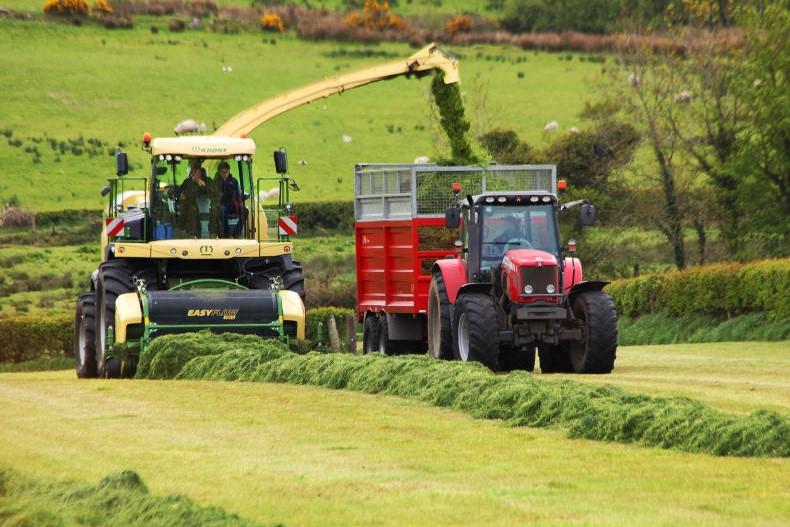
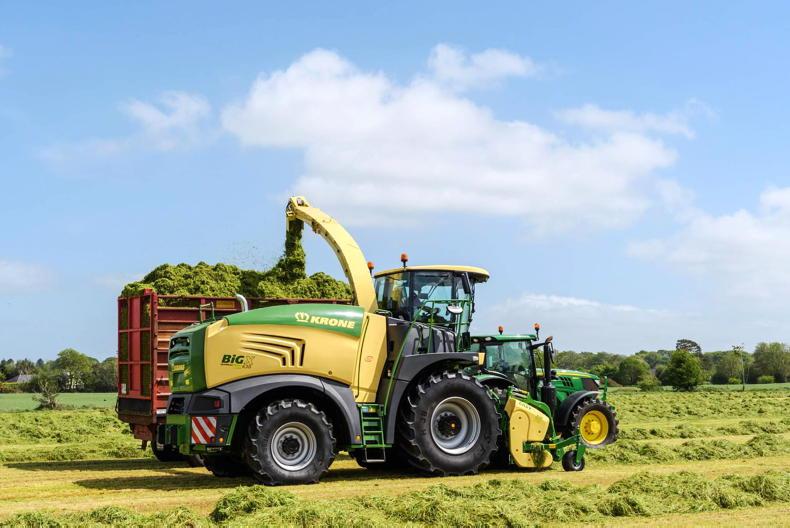
First-cut silage has now been harvested on the majority of beef farms across the country and in general, farmers report that yields are lower than previous years.
Individual reports indicate that yields are down by as much as 10% to 50%, depending on when the crop was harvested.
In addition to lower yields, dry conditions led many farmers to hold off on applying slurry and fertiliser to kick-start regrowth for second-cut. But with rain recorded in the past week, many farmers have now got slurry and fertiliser on to second-cut areas.
Lower yields and late applications of fertiliser for second-cut have caused some farmers concerns around how much fodder will be on-farm for the winter.
The main thing to remember is not to panic. Time is on your side and options are available to boost fodder stocks over the coming months.
Compensatory grass growth
A similar situation occured in June 2018, when fodder and grass reserves were also hit by drought.
However, the year balanced itself out with a favourable autumn, allowing many farmers to harvest silage late in the year and extend the grazing season into November.
Generally speaking, farms tend to grow the same volume of grass every year, so don’t rule out a recovery in grass yields later this summer.
Higher feed value
Grass harvested earlier than normal will have less fibre. As such, silage will be easier to digest and cattle can fully utilise the energy and protein content.
Therefore, cattle should require less forage on a daily basis to meet their nutritional needs, but silage should still be tested to determine its feed value.
Dry matter
With favourable harvesting conditions, silage crops will have a high dry matter. Although tonnage in the clamp is lower, there should still be a similar level of dry matter energy present in silage, as there is less water present.
For instance, take a clamp measuring 25m long, 12m wide and an average height of 2m.
At 25% dry matter, there is approximately 408t of silage present on a fresh weight basis, which converts to 102t on a dry matter basis.At 30% dry matter, the fresh weight of silage is lower, at 362t. But with less water, the dry matter content rises to 108t of silage.At 35%, the fresh weight of silage is approximately 321t, with dry matter volume around 112t. 1. Fodder budget
The first thing to do is calculate how much silage is on-farm after first-cut. Follow this by how much fodder cattle will eat during a normal winter period. Build in a 10% buffer for safety.
To calculate the tonnage of grass in the pit, measure the length, width and average height of the clamp in metres to get the cubic capacity.
For grass at 30% dry matter, multiply the pit’s capacity by 0.64 to convert to tonnes. At 35% dry matter, multiply the pit’s capacity by 0.53 to convert volume to tonnes.
You then need to work out what cattle will eat during the winter. On average, dry suckler cows will eat 0.75t to 1t of silage per month, depending on size and silage quality.
Light stores and weanlings will eat similar quantities. Finishing cattle will eat close to 1t/month. Lactating cows will typically eat 1.5t/month.
Calculate how many cattle you are likely to have this winter and their fodder requirement for a six-month winter.
To simplify this, there is a fodder calculator available at www.farmersjournal.ie/toolbox/fodder. Update this fodder budget as the summer progresses.
2. Opt for bulk in second-cut
There has been some rainfall over the past week, so fertiliser should have now been applied for second-cut.
As there are less issues with grass heading out in second-cut, there is the option to delay cutting date by one to two weeks to increase bulk. Once harvested, update the fodder budget as early as possible.
3. Is there time for a third cut?
If there is still a deficit after second-cut, there may be time to close up ground for a small third cut. Silage ground closed off in early June will be ready to cut by late July to early August.
This should allow a six week period to make a small third cut, if necessary. Grass growth will naturally tail off at this point in the year, so apply 50 to 60 units of nitrogen per acre. Yields in early September should be in the region of 5t to 6t/ac.
4. Whole crop
For mixed tillage and livestock farms, or farms located in a tillage area, there is the option to ensile whole crop silage along with the second cut.
Ideally, you want to mow crops around 30% to 35% moisture, just as the grain turns to a cheese-like consistency.
While it will provide bulk with yields of 10t to 15t/ac, whole crop has a lower feed value compared to good-quality silage.
Whole crop is generally high in fibre and low in protein. So for best results, feed 50% whole crop mixed with 50% grass silage to stores, weanling and lactating cows.
An alternative is to harvest the headland areas of tillage fields, plus the boundary sward for silage.
These areas tend to have lower yields of straw and grain, so may be better off in the pit if there is a fodder deficit. The remainder of the tillage crop can be combined as normal.
5. Buying silage
There is also the option of buying silage, either as a standing crop or saved fodder. For this option, think hard about the merits of buying grass as a standing crop, rather than buying later in winter as bales, or as pit silage.
If you buy the standing crop, you have more control over the quality of grass ensiled. It will also be more practical to ensile it in your own yard, rather than hauling trailer loads of silage mid-winter.
6. Using carry-over of silage from last year
On many farms, there is good carry-over of 2019 silage that can be utilised. Prioritise this fodder for using up first.
With bales, there is a higher risk of mould and spoilage where plastic has been punctured or bales were not double wrapped. Do not feed this silage to in-calf cows.
With pit silage still on-farm, forage quality should be OK and safe to use, provided the clamp was sealed properly last year.
7. Forage crops
The final option is to grow a catch crop of kale, forage rape, stubble turnips or fodder beet to stretch the grazing season into early winter. However, this option is limited to farms operating on dry land.
Read more
BETTER Farm NI: Farms finished with first-cut silage
Paddock system paying off in Cranna
First-cut silage has now been harvested on the majority of beef farms across the country and in general, farmers report that yields are lower than previous years.
Individual reports indicate that yields are down by as much as 10% to 50%, depending on when the crop was harvested.
In addition to lower yields, dry conditions led many farmers to hold off on applying slurry and fertiliser to kick-start regrowth for second-cut. But with rain recorded in the past week, many farmers have now got slurry and fertiliser on to second-cut areas.
Lower yields and late applications of fertiliser for second-cut have caused some farmers concerns around how much fodder will be on-farm for the winter.
The main thing to remember is not to panic. Time is on your side and options are available to boost fodder stocks over the coming months.
Compensatory grass growth
A similar situation occured in June 2018, when fodder and grass reserves were also hit by drought.
However, the year balanced itself out with a favourable autumn, allowing many farmers to harvest silage late in the year and extend the grazing season into November.
Generally speaking, farms tend to grow the same volume of grass every year, so don’t rule out a recovery in grass yields later this summer.
Higher feed value
Grass harvested earlier than normal will have less fibre. As such, silage will be easier to digest and cattle can fully utilise the energy and protein content.
Therefore, cattle should require less forage on a daily basis to meet their nutritional needs, but silage should still be tested to determine its feed value.
Dry matter
With favourable harvesting conditions, silage crops will have a high dry matter. Although tonnage in the clamp is lower, there should still be a similar level of dry matter energy present in silage, as there is less water present.
For instance, take a clamp measuring 25m long, 12m wide and an average height of 2m.
At 25% dry matter, there is approximately 408t of silage present on a fresh weight basis, which converts to 102t on a dry matter basis.At 30% dry matter, the fresh weight of silage is lower, at 362t. But with less water, the dry matter content rises to 108t of silage.At 35%, the fresh weight of silage is approximately 321t, with dry matter volume around 112t. 1. Fodder budget
The first thing to do is calculate how much silage is on-farm after first-cut. Follow this by how much fodder cattle will eat during a normal winter period. Build in a 10% buffer for safety.
To calculate the tonnage of grass in the pit, measure the length, width and average height of the clamp in metres to get the cubic capacity.
For grass at 30% dry matter, multiply the pit’s capacity by 0.64 to convert to tonnes. At 35% dry matter, multiply the pit’s capacity by 0.53 to convert volume to tonnes.
You then need to work out what cattle will eat during the winter. On average, dry suckler cows will eat 0.75t to 1t of silage per month, depending on size and silage quality.
Light stores and weanlings will eat similar quantities. Finishing cattle will eat close to 1t/month. Lactating cows will typically eat 1.5t/month.
Calculate how many cattle you are likely to have this winter and their fodder requirement for a six-month winter.
To simplify this, there is a fodder calculator available at www.farmersjournal.ie/toolbox/fodder. Update this fodder budget as the summer progresses.
2. Opt for bulk in second-cut
There has been some rainfall over the past week, so fertiliser should have now been applied for second-cut.
As there are less issues with grass heading out in second-cut, there is the option to delay cutting date by one to two weeks to increase bulk. Once harvested, update the fodder budget as early as possible.
3. Is there time for a third cut?
If there is still a deficit after second-cut, there may be time to close up ground for a small third cut. Silage ground closed off in early June will be ready to cut by late July to early August.
This should allow a six week period to make a small third cut, if necessary. Grass growth will naturally tail off at this point in the year, so apply 50 to 60 units of nitrogen per acre. Yields in early September should be in the region of 5t to 6t/ac.
4. Whole crop
For mixed tillage and livestock farms, or farms located in a tillage area, there is the option to ensile whole crop silage along with the second cut.
Ideally, you want to mow crops around 30% to 35% moisture, just as the grain turns to a cheese-like consistency.
While it will provide bulk with yields of 10t to 15t/ac, whole crop has a lower feed value compared to good-quality silage.
Whole crop is generally high in fibre and low in protein. So for best results, feed 50% whole crop mixed with 50% grass silage to stores, weanling and lactating cows.
An alternative is to harvest the headland areas of tillage fields, plus the boundary sward for silage.
These areas tend to have lower yields of straw and grain, so may be better off in the pit if there is a fodder deficit. The remainder of the tillage crop can be combined as normal.
5. Buying silage
There is also the option of buying silage, either as a standing crop or saved fodder. For this option, think hard about the merits of buying grass as a standing crop, rather than buying later in winter as bales, or as pit silage.
If you buy the standing crop, you have more control over the quality of grass ensiled. It will also be more practical to ensile it in your own yard, rather than hauling trailer loads of silage mid-winter.
6. Using carry-over of silage from last year
On many farms, there is good carry-over of 2019 silage that can be utilised. Prioritise this fodder for using up first.
With bales, there is a higher risk of mould and spoilage where plastic has been punctured or bales were not double wrapped. Do not feed this silage to in-calf cows.
With pit silage still on-farm, forage quality should be OK and safe to use, provided the clamp was sealed properly last year.
7. Forage crops
The final option is to grow a catch crop of kale, forage rape, stubble turnips or fodder beet to stretch the grazing season into early winter. However, this option is limited to farms operating on dry land.
Read more
BETTER Farm NI: Farms finished with first-cut silage
Paddock system paying off in Cranna






SHARING OPTIONS